The Lonesome Soul: Discovering the Stories Behind East Galway Tunes

You’re sitting in a crowded session in Woodford, bow poised, when the box player starts a tune you’ve practiced for months. But as the melody unfolds, you notice the locals playing with a certain "nyah" or soul that isn't on the sheet music. It’s a common hurdle; feeling like an outsider because you haven't yet discovered the stories behind east galway tunes that give this tradition its life. Without that regional context, the music can feel like a beautiful shell missing its heart.
We can all agree that playing a tune is one thing, but inhabiting it is quite another. I’m going to help you uncover the hidden folklore and legendary characters, like the mysterious Paddy Fahy, who gave this region its signature contemplative pulse. This article explores how local history shapes every lift and turn, helping you find that elusive lonesome sound. By the end, you’ll have the context needed to connect more deeply with your instrument and build a more authentic personal repertoire. We’ll dive into the histories that make this music a definitive statement of a lifetime’s passion, ensuring your next session feels like a homecoming.
Table of Contents
The Lonesome Soul of East Galway: Why Stories Matter
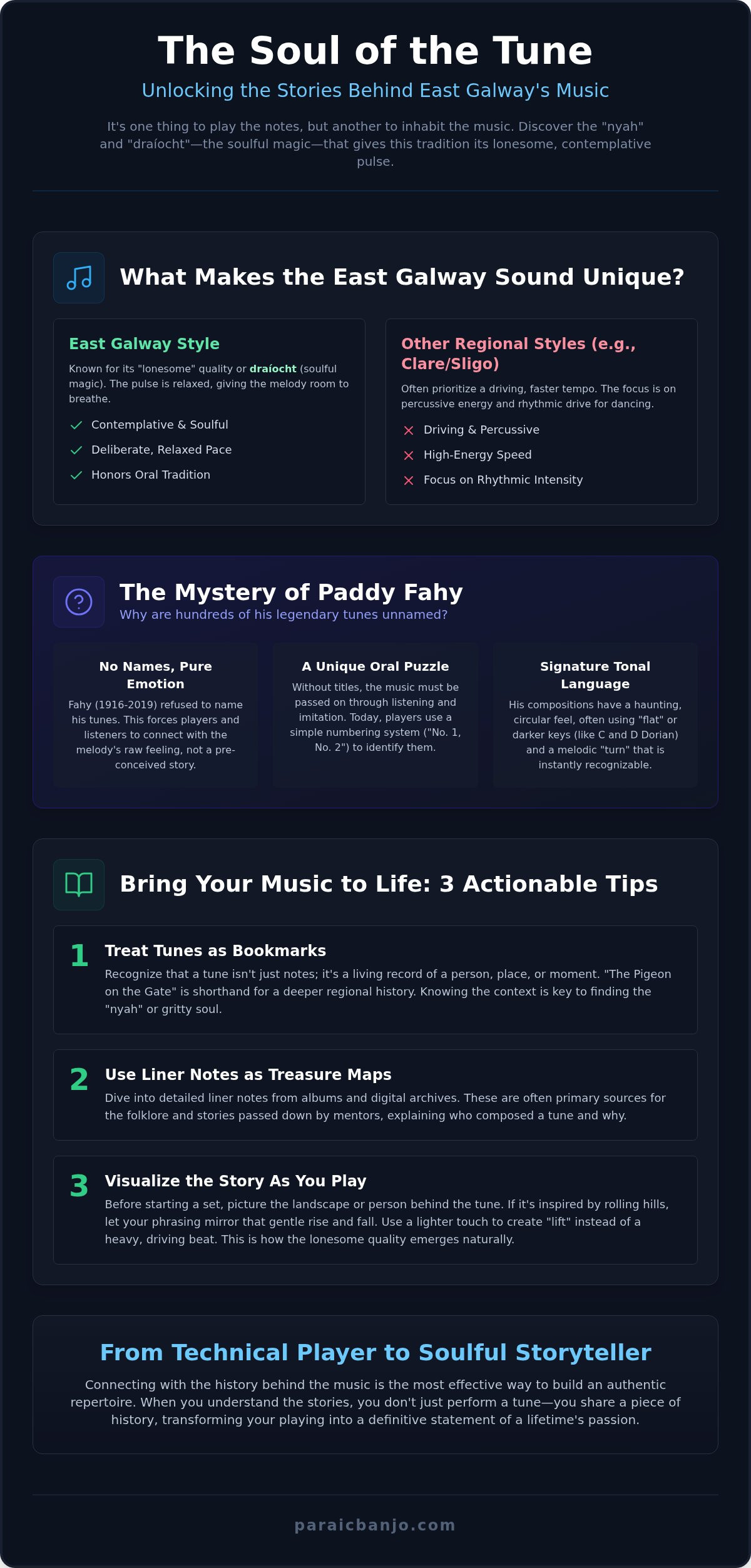
When people talk about the East Galway style, they often use the word "lonesome." It isn't about being sad; it’s about a specific quality we call *draíocht*. This is a kind of soulful magic that lingers in the ear long after the last note fades. While neighboring styles in Clare or Sligo might prioritize a driving, percussive speed, the East Galway pulse is famously relaxed. We let the melody sit. We give it room to breathe. This deliberate pace isn't just a technical choice; it’s a way to honor the oral tradition that has kept this music alive for generations.
Think of a tune as a bookmark. In the West of Ireland, a reel isn't just a sequence of notes; it’s a record of a specific moment, a neighbor’s kitchen, or a long-gone fiddler’s favorite corner. If you don't know the stories behind east galway tunes, you're only reading half the page. You might play the notes perfectly, but you’ll miss the "nyah." This term refers to that elusive, gritty soul and regional character that only comes when you understand who or what the music represents. Uncovering the stories behind east galway tunes is the best way to move from being a technical player to a soulful one.
The Difference Between a Name and a Story
A title like "The Boy in the Boat" or "The Pigeon on the Gate" might seem simple, even whimsical. But these names are often shorthand for much deeper regional histories. Mentors pass these down through the years, not just by showing you where to put your fingers, but by telling you about the person who composed it. Take the work of Paddy Fahey, for example. His compositions are legendary for their complexity and flat keys, yet they remain unnamed. To play them correctly, you have to listen to the stories shared by those who knew him. That connection is the heartbeat of the West. If you want to dive into these histories yourself, the "Not Before Time – 39 Years in the Making" Digital Album includes detailed notes that act as a primary source for this lore.
How Knowing the Story Changes Your Playing
Knowing the history isn't just for trivia night at the pub. It’s a functional tool for your repertoire. Try this practical tip: before you start a set, visualize the landscape or the person associated with the tune. If you’re playing a piece inspired by the rolling hills of East Galway, let your phrasing mirror that gentle rise and fall. Use a lighter touch on the bow or pick to create "lift" rather than a heavy, driving beat. This contemplative approach allows the lonesome quality to emerge naturally. It transforms a generic performance into a definitive statement of your own musical journey. You can hear this specific regional "lift" captured in the live energy of the "Not Before Time – 39 Years in the Making" Physical CD, which serves as a physical artifact of these very stories.
The Mystery of Paddy Fahy: Why Hundreds of Tunes Have No Names
If you’ve ever spent time in a Galway session, you’ve likely heard the name Paddy Fahy whispered with a mix of reverence and slight frustration. Fahy (1916–2019) was a prolific composer who shaped the regional sound for over a century. Yet, he famously refused to name his tunes. This choice created a unique oral puzzle. Without a title to cling to, the listener is stripped of preconceived ideas. You aren't thinking about a specific character or place; you’re simply feeling the melody's weight. This is the ultimate example of how the stories behind east galway tunes aren't always found in words, but in the deliberate absence of them.
Players today use a "No. 1, No. 2" numbering system just to keep things straight. It’s a practical solution to a poetic problem. By stripping away the names, Fahy ensured that the music spoke for itself, demanding your full emotional attention. It’s a tradition that rewards the listener who is willing to sit with the music rather than just catalog it.
The Tonal Language of Fahy's Music
Fahy’s work is instantly recognizable by its haunting, circular feel. He often favored "flat" or darker keys like C and D Dorian, which give the music a brooding, introspective edge. If you want to dive deeper into the technical side, this scholarly analysis of his compositions explores the complex structures he used. Listen for the "turn," that specific melodic twist that signals a Fahy tune is underway. It’s a signature that session veterans pick up on within the first few bars. These melodies don't just move; they spiral, pulling you into a contemplative state that defines the East Galway style.
Finding Fahy in Your Own Collection
Searching for these tunes can feel like a scavenger hunt. When you’re digging through digital libraries or archives, search for "Paddy Fahy’s Reel" or "Fahy’s Jig" rather than looking for specific titles. For tenor banjo players, mastering a Fahy tune is a rite of passage. It requires a steady hand and a deep understanding of the regional pulse. I’ve spent years living with these melodies, and you can find my own tribute to this style on the Not Before Time project. It’s a great way to start building your own authentic repertoire. If you’re looking to own a piece of this history, you can pick up the Not Before Time – 39 Years in the Making (Digital Album) to hear how these no-name tunes come to life in a live setting.
From Ballinakill to Joe Cooley: Tunes Named for People and Places
The story of East Galway music took a massive leap forward in the 1920s. That’s when the Ballinakill Céilí Band became one of the first traditional groups to be commercially recorded in Ireland. They brought a sound that was disciplined yet full of life, helping the world understand the stories behind east galway tunes that had previously stayed within local parishes. When you hear regional anthems like "The Copperplate" or "The Old Bush," you’re hearing the echo of a specific community’s pride. These tunes aren't just notes; they're the sonic signature of a townland.
Joe Cooley is another name that stands as a pillar in this tradition. He served as a musical bridge, blending the relaxed Galway pulse with the more driving energy found in County Clare. This "Cooley Style" often featured a lonesome accordion sound that deeply influenced how we play the banjo and fiddle today. It’s about that sweet, melodic flow that never feels rushed. It’s a style that prioritizes the "lift" of the music over raw speed.
The Ballinakill Tradition: Rhythmic Strength
Achieving a tight ensemble sound without losing the "swing" was the great achievement of the Ballinakill players. Musicians like Lucy Farr and Vincent Broderick added layers of elegance to the regional repertoire, proving that you don't need breakneck speed to create excitement. If you want to improve your own timing, here is a practical tip: spend some time listening to old 78rpm recordings of the band. Listen for the "synchronized" feel where the instruments breathe together as one unit. It’s a masterclass in collective rhythm that you can apply to any session. You’ll notice how they hold back just enough to let the melody shine.
Tunes as Tributes: The Human Connection
In this part of the world, tunes are rarely just abstract melodies. They’re tributes. Many are named after neighbors, local priests, or colorful characters from the townlands. This naming tradition turned every session into a living community archive. When you learn a tune’s name, you’re often learning about a person’s life or a specific place in the landscape. Understanding these connections is essential if you want to grasp the East Galway vs Clare Music distinctions. By learning the stories behind east galway tunes, you aren't just memorizing notes; you’re preserving a legacy. This human element is exactly what I wanted to capture in my own work. My project, Not Before Time – 39 Years in the Making (Digital Album), is a collection of these community connections, with every track serving as a nod to the masters who came before us.
How to Uncover the History in Your Own Tune Collection
Finding the stories behind east galway tunes is a bit like being a detective in a musical landscape. You’re looking for the fingerprints of the people who played these melodies before you. It takes a bit of effort, but the payoff is a much deeper connection to the music you love. When you understand the lineage of a reel, you aren't just playing notes; you’re carrying a legacy forward.
Step 1: Scrutinize the liner notes. They aren't just lists of names; they are treasure maps for collectors.
Step 2: Use the ITMA digital resources. The Irish Traditional Music Archive has done a magnificent job of preserving the West of Ireland’s heritage.
Step 3: Talk to the elders. The oral tradition is still very much alive in the pubs of Galway and Clare. Don’t be afraid to ask about a tune’s origin between sets.
Step 4: Cross-reference on 'The Session'. Use thesession.org to see different versions of a tune, but remember that the local version you hear in a Galway kitchen is often the one with the most soul.
The Power of High-Quality Liner Notes
We live in an age of convenience, but digital downloads often miss the best part of an album: the context. When you’re looking to understand the stories behind east galway tunes, liner notes are your primary source. Look for specific phrases like "learned from," "composed by," or "named for." These clues lead you directly to the heart of the tradition. In my own project, I made sure the liner notes act as a comprehensive guide for each of the 18 tracks. They provide the historical context that turns a simple recording into a living history of the region.
Researching the 'Nyah' Beyond the Sheet Music
Sheet music is a wonderful tool, but it’s just a skeleton. To find the "nyah"—which is our word for that elusive regional soul—you have to listen closer. You’re looking for "ghost notes," those subtle, unwritten sounds that add texture, and the "lift" that gives the tune its rhythmic bounce. These elements are almost never written down on a page. Here’s a practical tip: record your own sessions. When a fellow player tells a story between tunes, capture it. Those snippets of conversation are often more valuable than the notes themselves. They help you understand the emotional intent of the music, allowing you to play with a more authentic pulse. If you want to start your collection with a primary source of these histories, you can get the Not Before Time Digital Album today and start exploring these stories for yourself.
Preserving the Pulse: Stories in 'Not Before Time'
Recording an album shouldn't be a rushed affair. I waited 39 years to release "Not Before Time – 39 Years in the Making" because I wanted the music to settle into my bones first. This project isn't just a collection of melodies; it’s a definitive statement of a lifetime spent immersed in the regional style. Every track serves as a bridge to the past, ensuring that the stories behind east galway tunes aren't lost to time. By waiting decades, I could ensure the "lift" and "pulse" were exactly right, reflecting the quiet confidence of a seasoned tradition. This isn't just commercial work. It’s a relief and a celebration of a storied musical heritage.
The 18 tracks on this album act as a living history. They represent the people I’ve sat with in kitchens and the sessions that shaped my own musical soul. When you listen, you aren't just hearing a banjo; you’re hearing the collective memory of East Galway and Clare. Buying directly from the artist is the best way to support this ongoing cycle. It ensures that the tradition remains vibrant and that these stories continue to be told to the next generation of players. It’s about keeping the heartbeat of the West alive in a digital age.
Inside the 18 Tracks
The tunes I chose for this collection were picked for their character and history. I wanted to capture the infectious enthusiasm of a real session, which is why we recorded the album live. You can hear the spontaneous energy that a sterile studio environment often kills. This collaborative spirit is bolstered by featured performers who bring their own regional flavors to the mix. It isn't a solitary effort. It’s a celebration of the community that makes this music what it is. From the haunting compositions of Paddy Fahy to the rhythmic strength of the Ballinakill tradition, every track is a piece of the puzzle.
Bring the Tradition Home
For the serious collector, the Physical CD is more than just a music carrier. It’s a physical artifact. The extensive liner notes included with the "Not Before Time – 39 Years in the Making" Physical CD provide the historical context we’ve discussed throughout this article. They act as a trust-builder, showing you the "why" behind every note played. If you want to know how to buy traditional irish music that carries real weight and authenticity, start with sources that prioritize these stories. Join the journey today and discover the soul of the session. You can find the Not Before Time – 39 Years in the Making (Digital Album) online to start building your own authentic repertoire immediately. Let these tunes become part of your journey and carry the pulse forward.
Bring the Soul of East Galway into Your Sessions
You’ve seen how the lonesome pulse of this region is built on more than just notes. It’s the result of centuries of oral history and the legendary characters who walked these townlands. By digging into the stories behind east galway tunes, you’re doing more than just memorizing a melody. You’re becoming a custodian of a tradition that values the "lift" and the "nyah" above all else. This context is what turns a good player into a true storyteller.
Now it’s time to take that connection home. My project, 39 years in the making, features 18 tracks recorded live to capture that raw session energy. It comes with extensive historical liner notes that serve as your personal guide to this regional lore. Experience 39 years of musical history; get 'Not Before Time' on CD or Digital today.
Keep the music alive and let these storied melodies guide your hands. Every tune you play is a way to honor the masters who came before us. Happy playing.
Frequently Asked Questions
What exactly is the 'East Galway style' of Irish music?
The East Galway style is a regional approach to traditional music defined by a relaxed tempo and a soulful, melodic quality often described as "lonesome." Unlike the driving, percussive rhythms found in Clare or Sligo, this style prioritizes emotional depth and a steady, unhurried pulse. We call this "draíocht," a kind of musical magic that lets every note breathe. It’s a contemplative way of playing that rewards patience and a steady hand.
Why are so many traditional Irish tunes named after people?
Many traditional tunes are named after people as a way to create a living community archive and honor the musicians who passed the music down. In the oral tradition, naming a reel after a neighbor, a local priest, or a traveling fiddler ensured their memory stayed alive through the notes. These titles act as bookmarks for history. They turn a simple session into a tribute to the characters who shaped the local culture.
How can I find the original composer of an Irish tune?
You can find the original composer of a tune by researching detailed liner notes, digital archives, and specialized databases like the Irish Traditional Music Archive (ITMA). Many players also use sites like thesession.org to discuss the stories behind east galway tunes and track their origins. If a tune is simply called "The Fiddler’s Reel," look for older recordings that might mention a specific person. Talking to elder musicians remains the most reliable method.
Is it better to learn Irish music by ear or from sheet music?
It is generally better to learn Irish music by ear because this method allows you to absorb the "swing" and "nyah" that standard notation often misses. While sheet music provides a helpful skeleton, the subtle ornaments and rhythmic lifts are best learned through active listening. This preserves the authentic regional pulse of the music. If you do use notation, always supplement it by listening to master players to understand the emotional intent behind the notes.
What makes the tenor banjo a good instrument for East Galway tunes?
The tenor banjo is a perfect fit for East Galway music because its clear articulation allows the intricate melodies to ring out at a relaxed pace. Since we avoid breakneck speeds in this tradition, the banjo can emphasize the "lift" and subtle variations without the sound becoming muddy. It provides a steady, rhythmic backbone while still letting the soulful flow of the melody take center stage. Its percussive nature adds a wonderful texture to any session.
Where can I find the most authentic stories behind traditional tunes?
You will find the most authentic stories behind east galway tunes in the liner notes of dedicated regional albums and through direct conversations with seasoned session players. Archives like the ITMA are invaluable, but the most colorful lore is often shared between sets at a pub. These stories provide a rich tapestry of folklore that generic music sites simply don't cover. Look for physical artifacts like CDs that include extensive historical background notes.
Can I still find traditional Irish music stories in modern recordings?
Modern recordings like "Not Before Time – 39 Years in the Making" still carry these stories through extensive historical notes and live-recorded energy. These projects act as primary sources for the tradition, ensuring that the folklore isn't lost in the digital age. By buying direct from the artist, you support the preservation of these narratives. It’s a way to ensure the heartbeat of the West stays vibrant for the next generation of listeners.
Who was the most influential composer in the East Galway tradition?
Paddy Fahy is widely considered the most influential composer in this tradition, known for his unnamed compositions and haunting use of flat keys. His work defined the modern "lonesome" sound of the region, emphasizing complex, circular melodies that demand full emotional attention. Because he famously refused to name his tunes, his music forces the player to focus entirely on the soul of the melody. His influence is felt in every session throughout the West.


Comments