The Making of a Traditional Irish Album: Capturing the Soul of the Session

A truly authentic traditional Irish album isn't manufactured in a sterile studio; it's cultivated over decades of late night sessions and finally "captured" in its rawest, most honest form. In this look at the making of a traditional irish album, we're exploring why that "live" feel is so hard to find today. You've likely felt that sting of disappointment when a new folk record sounds too polished, stripped of the grit and the shared breath that makes a local session feel alive. It's frustrating. It ignores the deep history behind the tunes.
You'll discover the technical grit and rhythmic heart required to record a banjo project that actually breathes. We're moving past the "perfect" take to explore how 39 years of musical maturation helped shape Not Before Time – 39 Years in the Making, a debut built on the soulful, steady pulse of the East Galway style. You'll learn how we balanced the pressure of the recording engineer's "red light" with the organic energy of live collaboration. From selecting the right driving reels to preserving the natural lift of the music, this is a journey into the soul of the session.
Table of Contents
The Philosophy of a Traditional Irish Recording
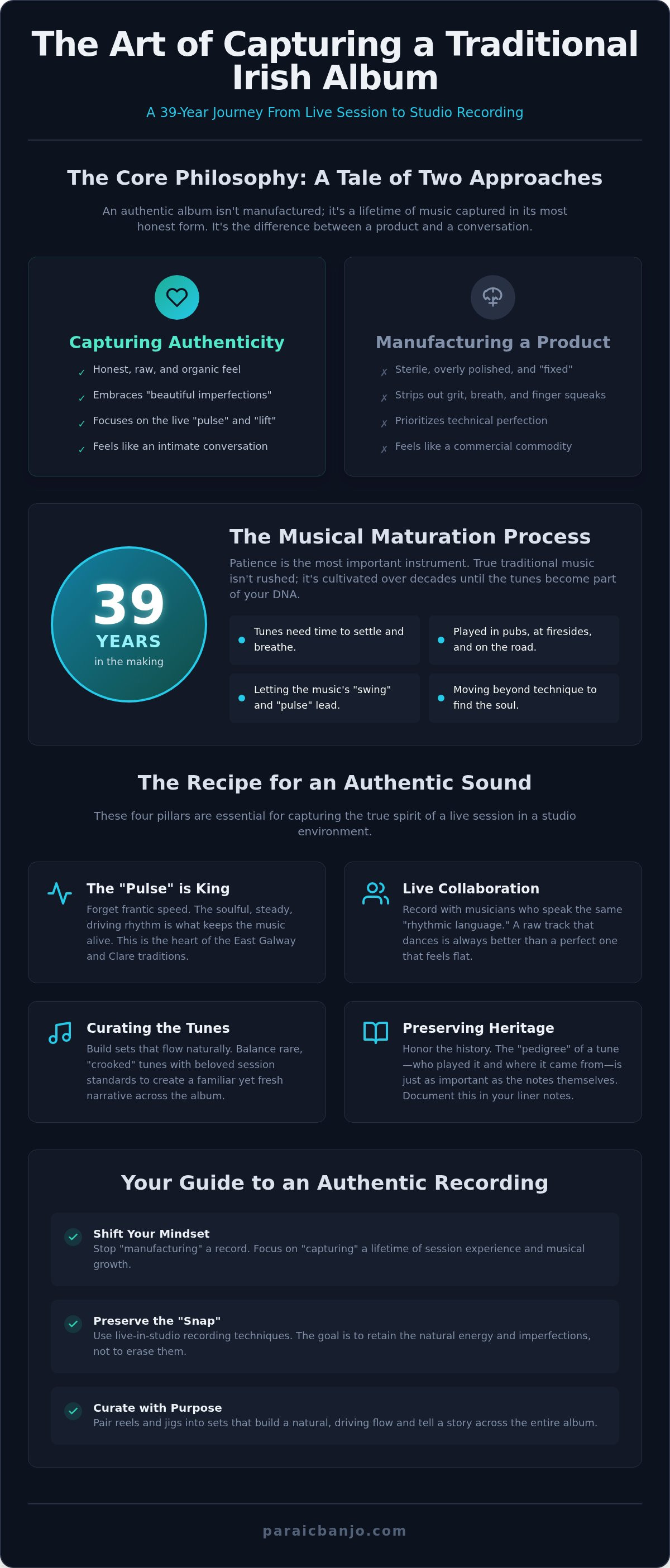
Patience isn't just a virtue in this craft; it's the most important instrument you'll ever carry. When we talk about the making of a traditional irish album, we aren't just talking about booking a studio and hitting record. We're talking about a slow, deliberate gathering of stories, rhythms, and regional nuances. There is a massive difference between "making" an album and "capturing" a lifetime of music. One feels like a commercial product; the other feels like an honest conversation. My debut project, Not Before Time – 39 Years in the Making, was born from the belief that some things shouldn't be rushed. You wait until the music is ripe.
In the West of Ireland, particularly within the East Galway and Clare traditions, the "pulse" is king. Speed is impressive for a few seconds, but a steady, driving rhythm is what keeps a session alive. It's about the "lift" in the music. If you want to understand this soul, focus on the space between the notes. That's where the heart lives. You can experience this rhythmic drive across all 18 tracks when you pick up the Not Before Time – 39 Years in the Making (Digital Album).
Tradition vs. Commercial Production
Modern production often tries to "fix" folk music by stripping out the squeak of a finger on a string or the audible breath of the player. Don't fall for that trap. The soul of a session is found in its beautiful imperfections. When you're planning a recording, choose collaborators who speak your same rhythmic language. It's better to have a raw track that actually dances than a perfect one that sits flat on the floor. This preservation of authentic sound is a vital part of the history of Irish music collecting, moving the tradition from the kitchen to the digital age without losing its spirit.
The 39-Year Maturation Process
Why wait nearly four decades to release a debut? Because tunes need time to settle. They need to be played in crowded pubs, at quiet firesides, and during long rainy drives. This maturation isn't about reaching technical perfection. It's about the tunes becoming part of your DNA. Musical maturity is the hard-won ability to let the tune breathe. If you're a musician, try this: pick a tune you've known for years and play it at half speed. Focus entirely on the "swing" and the "pulse" rather than the fancy ornaments. You'll find the soul of the music hiding in the slow lane.
For those who value the tactile connection to a project decades in the development, the Not Before Time – 39 Years in the Making (Physical CD) includes extensive liner notes that dive even deeper into these regional styles. It's a definitive statement of a lifetime's passion, and I'm thrilled to finally share it with you. Dive in and feel the pulse!
Selecting the Tunes: Curating Reels, Jigs, and Hornpipes
Selecting the right tunes is where the real storytelling begins. It's not just a random collection of melodies; it's a deliberate curation of history. When I sat down to plan the making of a traditional irish album, I knew every set had to have a reason for existing. A "set" is simply two or three tunes played back-to-back, but the magic lies in the transition. You want the energy to lift naturally as you move from a bouncy jig into a driving reel, creating a momentum that feels effortless. This flow is what keeps a session from feeling like a rehearsal.
Finding these tunes often involves digging through the Irish Traditional Music Archive to find those rare, "crooked" tunes that haven't been overplayed in every pub in the country. This level of research is what separates a generic release from the authentic making of a traditional irish album. You balance those rare gems with session standards that everyone knows and loves. This creates a sense of familiarity while still offering the listener something fresh. My own journey was shaped by mentors who taught me that the pedigree of a tune — who played it and where it came from — is just as important as the notes themselves.
Regional Identity in Tune Selection
Your regional style dictates the "swing" of the entire album. If you are leaning into East Galway vs Clare music, you're choosing tunes that emphasize a relaxed, soulful pulse over frantic speed. A hornpipe from Galway has a specific weight to it; it feels different than the bouncy versions you might hear in Kerry. By honoring the composers and the old players who kept these melodies alive, you're grounding the project in a specific time and place. It’s about more than just playing; it’s about participating in a lineage that stretches back generations.
Building a Narrative Through 18 Tracks
With 18 tracks on "Not Before Time," the challenge was keeping the listener engaged from start to finish. You can't just play 18 reels in the same key. You have to vary the keys, the tempos, and the arrangements to keep the ear interested. I mixed solo banjo tracks with full ensemble pieces to create a "live session" arc. Some tracks feel like the quiet start of the night, while others carry the high-energy peak of a late-night session. If you want to hear how these sets come together, you can explore the Individual Digital Tracks to find the specific combinations that resonate with you. This variety ensures the album feels like a complete journey rather than just a list of songs.
The Recording Process: Capturing the Live Session Pulse
Recording traditional music is a delicate balancing act. If you get too clinical, you lose the soul. If you get too messy, the listener can't hear the beauty of the ornamentation. For me, the "live in studio" approach is the only way to go. This means all the musicians play together in the same room at the same time. It's the gold standard for the making of a traditional irish album because it allows for eye contact, shared breath, and that telepathic connection you only get in a real session. You aren't just playing notes; you're reacting to the lift in the fiddle player's bow or the subtle push of the guitar player's rhythm.
To capture this properly, microphone placement is everything. For the tenor banjo, I use a two-mic setup. One is positioned near the bridge to capture the "snap," which is the sharp, percussive sound of the pick hitting the string. The second is placed further back to catch the "resonance," the warm, ringing tone that comes from the banjo's body. We also embrace "bleed," which is when the sound of one instrument leaks into another's microphone. In pop music, that's a mistake. In traditional music, it's the secret glue that makes the band sound like a single, breathing unit. Many artists find support for these high-quality projects through the Deis Recording and Publication Award, which recognizes the importance of documenting our living tradition.
Step-by-Step to a Live-Feel Recording
Select a "Warm" Room: Look for a space with wood floors and high ceilings. Avoid sterile, soundproof booths that suck the life out of the acoustic instruments.
Record Simultaneously: Don't record the guitar first and the banjo later. You need to feel the push and pull of the rhythm in real time to capture an authentic pulse.
Limit the Takes: Try to get the track in the first three tries. After that, the spontaneous energy starts to fade and the playing becomes mechanical.
The Banjo Player's Technical Setup
Your gear choices change when you're in front of a sensitive microphone. I often switch to a slightly heavier plectrum (pick) to get a rounder, more soulful East Galway tone. It’s about finding a sound that is rich and melodic rather than just loud and piercing. The 19-fret tenor banjo solidified its place in Irish music during the early 20th century, providing the sharp projection and sustain necessary to lead melodies in loud dance halls and crowded sessions. If you want to hear the result of this careful setup, dive into the Not Before Time – 39 Years in the Making (Digital Album). It’s all about that raw, unfiltered energy. Give it a listen and feel the difference!
Preserving Heritage: Liner Notes and Regional Context
Liner notes are often called the "secret sauce" of a great recording. They transform a collection of tracks into a living piece of history. In the making of a traditional irish album, documenting the pedigree of a tune is just as vital as the performance itself. A tune's pedigree tells you who played it, which session it was "caught" in, and the specific house or townland it calls home. When you listen to a reel from East Galway, you aren't just hearing a melody; you're hearing the echoes of the mentors who kept that rhythm alive during long winter nights. It's about grounding the music in the soil of places like Clare and Galway, ensuring the listener feels that deep, regional pulse.
Even for those who prefer digital formats, this context remains essential. Modern releases often include digital booklets or detailed metadata to ensure the stories aren't lost in the cloud. We want you to know why a particular jig matters or which old 78rpm record inspired a specific setting. This historical layer adds a weight and a soul that generic folk music simply can't match. It’s a definitive statement that honors the past while looking toward the future.
The Storytelling Aspect of Trad Music
The packaging of an album is a chance to share anecdotes gathered from 39 years of playing. It's where you find the stories of the characters, the pubs, and the quiet moments that shaped the music. Using photography and thoughtful design helps reflect the misty, rhythmic mood of the West of Ireland. This is why Not Before Time – 39 Years in the Making serves as more than just a debut; it's a historical document of a specific musical community. It captures the relief and celebration of a lifetime's passion finally committed to disc.
Actionable Tips for Collectors
If you want to support the tradition, here is how to find the best releases:
Check for Source Citations: High-quality albums will always credit the composers or the musicians who "passed down" the tunes.
Buy Direct from the Artist: This ensures your support goes straight toward the preservation of these niche styles and the creation of future projects.
Read While You Listen: Use the notes to identify regional "swing" or specific ornamentation styles. This will deepen your appreciation and help you recognize these patterns in future sessions.
For the most immersive experience, nothing beats the tactile connection of the physical packaging. You can find the full story and all the historical details by picking up the Not Before Time – 39 Years in the Making (Physical CD). It’s the best way to keep the tradition alive in your own home. Get your copy today!
Enjoy the journey through the notes!
Bringing the Tradition Home: The 'Not Before Time' Experience
The making of a traditional irish album is a marathon, not a sprint. It’s the culmination of every late-night session I’ve ever sat in and every crooked tune I’ve ever learned from a mentor. Bringing this music into your home is the final step of that 39-year journey. Whether you're listening in a quiet kitchen or through headphones on a busy commute, the goal remains the same: to make you feel like you're sitting right there in the middle of the session. This isn't just a collection of songs. It’s a rhythmic statement of a lifetime’s passion, and I’m so glad you’re part of it.
Choosing Your Format: CD vs. Digital
For the purists and audiophiles, the Not Before Time – 39 Years in the Making (Physical CD) is the way to go. There’s a specific joy in holding a physical disc and flipping through the pages of the booklet while the first track kicks in. It creates a tactile connection that digital files sometimes lack. However, I know life moves fast. That’s why the Not Before Time – 39 Years in the Making (Digital Album) offers high-quality audio for the modern, mobile fan. You get immediate access to all 18 tracks without losing an ounce of that East Galway soul. If you want to support the artists who keep these sounds alive, it’s always best to buy traditional irish music directly from the source. It ensures the tradition stays healthy and independent.
Next Steps for Your Collection
I invite you to join a community of listeners who value "slow-cooked" music. Take a moment to listen to the samples on the site. You’ll hear that unique East Galway "swing" we’ve been talking about; that relaxed yet driving pulse that defines our regional identity. Explore the stories behind the sets and get to know the characters who inspired this debut. This is your chance to own a piece of living history. Purchase the album today and bring the soul of the session into your own space. I can't wait to hear what you think of the tunes. Enjoy the lift!
Ready to dive in? You can pick up the full 18-track collection or select your favorite Individual Digital Tracks to start building your own session playlist. Every purchase directly supports the preservation of the East Galway and Clare styles. Join us in celebrating nearly four decades of dedication to the banjo. It’s been a long road, but we’re finally here. Let’s get the music started!
Step Into the Rhythmic Heart of the West
The making of a traditional irish album is more than just a technical project; it's a labor of love that honors the generations who came before us. We've explored how a live-in-studio approach captures the true soul of a session and why documenting the history of every reel and jig is vital for preserving our heritage. This isn't just about playing fast; it's about the steady, soulful lift of the East Galway style. By focusing on the pulse rather than just the speed, we ensure the music remains a living, breathing thing.
Now, you can bring that same energy into your own home. After 39 years of musical maturation, I'm thrilled to share this definitive statement with you. Featuring 18 tracks of authentic session music, it's a celebration of the community that shaped me. You can Order 'Not Before Time' - 39 Years in the Making directly from Páraic to experience it for yourself. The limited edition physical CD includes those detailed liner notes we discussed, giving you a front-row seat to the stories behind the strings. Grab your copy, put the kettle on, and let the music do the talking. It's been a long time coming, and I can't wait for you to hear it!
Frequently Asked Questions
How long does it take to record a traditional Irish album?
Preparation for the making of a traditional irish album often takes decades, but the physical recording can happen in just a few days if you record live. For "Not Before Time," the maturation process spanned 39 years. In the studio, aim for short, high-energy sessions to keep the music fresh. If you prepare your sets thoroughly beforehand, you can capture all 18 tracks in a single weekend without losing that vital session energy.
What is the difference between East Galway and Clare banjo styles?
East Galway style focuses on a soulful, relaxed pulse that favors rhythm over raw speed. It's often described as melodic or "lonesome" in its beauty. Clare style typically features a distinct "lift" and a driving, bouncy energy that is perfect for dancing. Both regions value the "swing," which is the rhythmic flow and internal bounce of the music. Understanding these nuances helps you appreciate the regional flavor found in authentic traditional recordings.
Why are liner notes so important for traditional music CDs?
Liner notes provide the "pedigree" of each tune, explaining where it came from and which musicians passed it down. In traditional music, a tune isn't just a melody; it's a connection to a specific person or townland. High-quality notes help you learn the history of the East Galway and Clare traditions. They turn a simple CD into a historical document, allowing you to engage with the music on a much deeper level than a digital file.
Can I download individual tracks or do I have to buy the whole album?
You can absolutely download Individual Digital Tracks if you prefer to pick your favorite sets. While the full album offers a complete "session" arc, buying single tracks is a great way to build a personalized playlist. This flexibility allows modern fans to support independent artists while enjoying the music on their own terms. Whether you want one specific reel or all 18 tracks, the choice is entirely yours to make.
What instruments are typically used to accompany a tenor banjo on a recording?
The tenor banjo often pairs beautifully with a fiddle for that classic unison melody sound. For accompaniment, a backing guitar or piano provides the harmonic foundation and helps drive the rhythmic pulse. On "Not Before Time," I recorded live with various collaborators to ensure the tracks felt like a real session. Choosing instruments that share a similar "swing" is essential for creating a cohesive and energetic traditional sound that really lifts the listener.
Is it better to record traditional music live or track-by-track?
Recording live is the gold standard for the making of a traditional irish album because it captures the spontaneous energy of a session. Track-by-track recording can feel sterile and often loses the natural "push and pull" between musicians. When everyone plays together in one room, you get a shared breath and a telepathic connection. This method preserves the raw, unfiltered lift that makes traditional music feel truly alive and authentic for the listener.
How do I know if a traditional Irish album is 'authentic'?
Authentic albums usually credit the sources of their tunes and lean into specific regional styles like East Galway or Clare. Look for recordings that haven't been over-produced; you should be able to hear the "snap" of the banjo and the natural resonance of the instruments. Authenticity is found in the rhythmic pulse and the player's connection to the tradition. A truly genuine project feels like an invitation into a storied musical heritage rather than a commercial product.
Where can I buy 'Not Before Time' by Páraic Mac Donnchadha?
You can buy the album directly from the official Páraic Banjo website. It's available as a limited-edition Physical CD, which includes extensive liner notes, or as a Digital Album for immediate download. Buying directly from the artist is the best way to ensure your support goes toward preserving these niche musical traditions. Visit the site to explore the full 18-track collection and find the format that best fits your listening style today.


Comments