The Pulse of Tradition: What Makes an Acclaimed Irish Banjo Album in 2026

The fastest banjo players in the world aren't necessarily the ones making the best music. Many listeners find themselves overwhelmed by modern recordings that prioritize technical speed over the rhythmic "lift" that makes you want to dance. It's easy to feel lost in a sea of over-produced tracks that lack the grit and soul of the tradition. If you've ever struggled to find an acclaimed irish banjo album that feels authentic rather than clinical, you aren't alone.
I understand that search for music with real weight and history. In this article, you'll discover the rhythmic secrets and soulful stories behind the most respected tenor banjo recordings. We'll explore the hallmarks of a classic album, from the drive of the "live" session energy to the specific nuances of the East Galway rhythmic style. We're going to dive into how 39 years of musical heritage can be distilled into a single project, helping you identify the pulse that separates a good recording from a definitive statement of a lifetime's passion.
Table of Contents
Defining the Hallmarks of an Acclaimed Irish Banjo Album
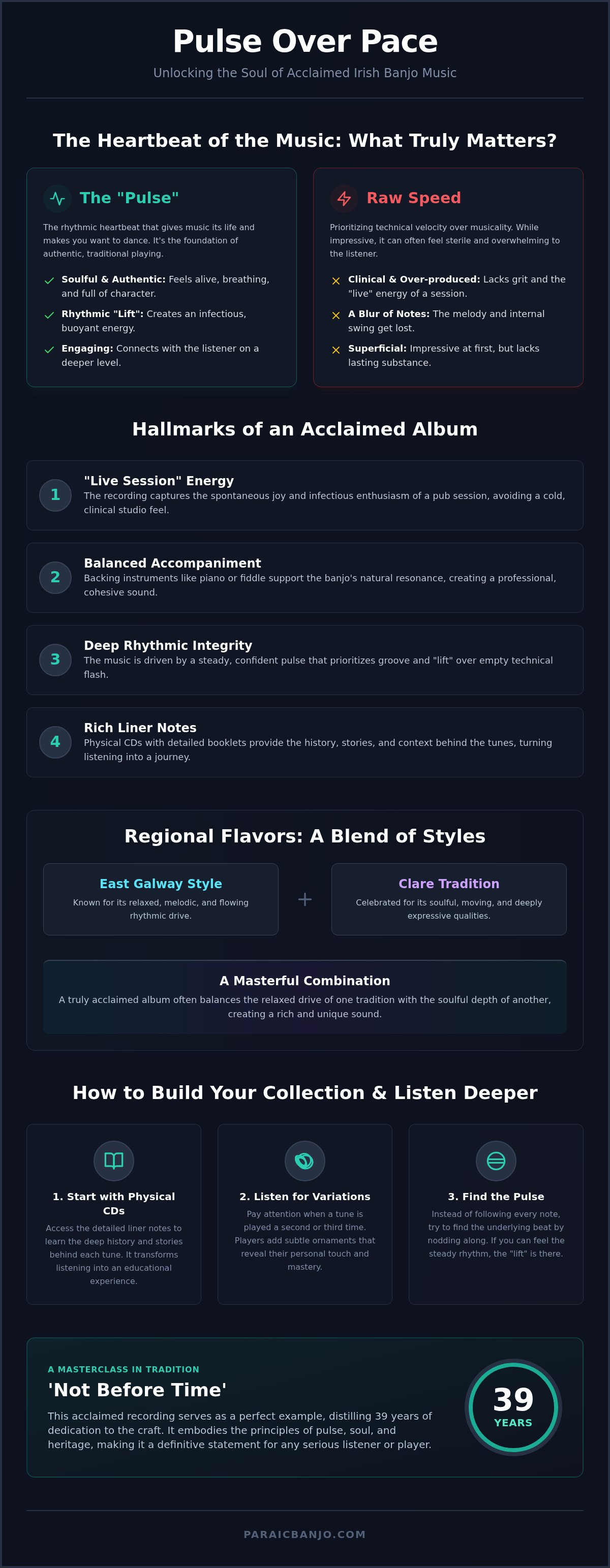
What makes an acclaimed irish banjo album stand out in a sea of modern digital releases? It isn't just about how many notes you can cram into a single bar. True acclaim in the traditional community is rooted in peer respect and rhythmic integrity. While the four-string tenor banjo is a powerful lead instrument, its real magic lies in its role as the heartbeat of a session. It needs to drive the tune without losing its soul.
You should always look for recordings that prioritize the "pulse" over flashy technical speed. Speed is impressive for a few minutes, but a steady, driving pulse is what sustains a tradition. It creates that infectious energy we call "lift." When a player hits that sweet spot, you don't just hear the music; you feel it in your feet. The choice of accompaniment plays a huge role here too. Whether it's the rhythmic bounce of a piano or the melodic weave of a fiddle, the backing should support the banjo's natural resonance to create a balanced, professional sound.
The Balance of Rhythmic Integrity and Soul
A soulful style feels alive and breathing. It's a far cry from clinical studio recordings where every tiny "imperfection" is scrubbed away. Traditionalists value the raw, "live" feel of a session because it captures the spontaneous joy of the moment. A perfect recording can sometimes feel cold, but a soulful one has character and grit. If you want to hear this balance in action, you can explore the individual digital tracks from my latest project to see how rhythm and soul work together.
Actionable Tip:
Listen closely when a player goes through a tune for the second or third time. They'll often add subtle variations or small ornaments that show their personal touch and deep connection to the melody.
Why Liner Notes are the Secret Ingredient
If the music is the "what," then liner notes are the "why." They provide the historical context that gives the tunes their meaning. In my debut album, Not Before Time – 39 Years in the Making, I included extensive notes because the stories of East Galway and Clare are just as important as the notes themselves. These stories help preserve our heritage for the next generation of players and listeners alike.
Liner notes transform a simple listening experience into an educational journey. They tell you who played the tune before, where it came from, and why it matters today. For the full experience, I always recommend picking up the physical CD of Not Before Time – 39 Years in the Making so you can sit down with the booklet and truly immerse yourself in the history.
Actionable Tip:
Use liner notes to learn the specific names and origins of the tunes you love. It helps you connect with the wider musical community and understand the regional styles that shaped the tradition.
The Secret to Rhythmic Mastery: Why Pulse Beats Speed
In the world of traditional music, speed is often mistaken for skill. But if you listen to any acclaimed irish banjo album, you'll notice something deeper than just fast fingers. It's the pulse. Think of the pulse as the heartbeat of a session. It’s the steady, internal clock that keeps a room of musicians in sync. The tenor banjo is unique because it acts as both a melody maker and a percussive engine. When a player "races" through a tune, they lose that vital internal swing. The music becomes a blur of notes rather than a living, breathing dance.
Great players spend decades perfecting this. They know that a tune without a pulse is just noise. It’s about finding the "lift" in every single bar. This isn't about being perfect; it's about being present in the rhythm. It takes a certain level of confidence to slow down and let the music breathe, ensuring every pluck of the string serves the overall groove of the tune.
Understanding the "Lift" in Tenor Banjo Playing
"Lift" is a term you'll hear often in Irish music circles. It describes the rhythmic buoyancy that keeps a reel or jig from feeling heavy or sluggish. It's that feeling that makes you want to tap your foot or reach for a pint. To achieve this, players use subtle accents on the off-beats. This creates a signature Irish swing that varies across different Regional Styles of Irish Traditional Music. In East Galway, for example, the lift is often more relaxed and melodic compared to the driving energy of other areas.
Actionable Tip:
Next time you listen to a track, try to find the pulse by nodding your head to the underlying rhythm rather than trying to follow every single note. If you can't find that steady beat, the "lift" might be missing.
The Role of the Banjo in a Traditional Session
The banjo has a bright, percussive tone that allows it to cut through the sound of a crowded pub session. However, the goal isn't to dominate the room. It’s about having "rhythmic soul." You want to weave your sound into the fabric of the session, especially when playing alongside a fiddle or accordion. This interaction is where the music really starts to cook.
When you listen to the 18 tracks on my debut project, you can hear this interaction clearly. It captures that raw, "live" energy where the banjo and accompaniment move as one. If you're looking for an acclaimed irish banjo album that prioritizes this connection, you can explore the digital album to hear the pulse for yourself. It’s about the conversation between the players, not just the solo spotlight.
Actionable Tip:
Listen for how the banjo player interacts with the backing instruments like the piano or bodhrán. A great player will leave space for the accompaniment, creating a collaborative sound rather than a competition.
Regional Flavours: The Sound of East Galway and Clare
Regional identity is what gives traditional music its distinct flavor. Without a sense of place, the music can feel generic or detached from its roots. To be considered an acclaimed irish banjo album, a recording must honor the specific "accents" of the regions where the tunes were born. It's about more than just hitting the right strings; it's about speaking the musical language of a specific community. These regional styles are the lifeblood of the tradition, providing the soul that listeners crave.
In my debut album, Not Before Time – 39 Years in the Making, I've spent decades absorbing the nuances of these styles. This project is a definitive statement of a lifetime's passion, blending the steady drive of East Galway with the emotive spirit of Clare. When you listen to a recording that understands these regional flavors, you're being invited into a storied tradition rather than just buying a digital product. It's a celebration of the community that keeps this music alive.
The Rhythmic Roots of East Galway
The East Galway style is legendary for its relaxed, melodic approach. It doesn't rush. It breathes. This "old school" way of playing avoids unnecessary ornamentation, focusing instead on the clarity and beauty of the melody itself. It's a highly rhythmic style that relies on a rock-solid pulse to carry the listener along. You can dive deeper into these distinctions by reading my guide on East Galway vs Clare Music: A Guide to the Rhythmic Soul of the West. This clarity is what makes the banjo such a compelling lead instrument in this tradition.
Capturing the Soul of the West of Ireland
While Galway provides the rhythm, Clare often brings a "lonesome" or soulful quality that is deeply moving. This sound is shaped by the geography and the tight-knit community sessions that have existed for generations. Legendary players from the West have left a permanent mark on how we interpret these tunes today. An acclaimed irish banjo album should feel like a collaboration with these past masters, honoring their influence while adding a personal touch.
The music of the West isn't just a collection of notes; it's a reflection of the people and the landscape. It carries the weight of history and the joy of the present moment. By blending these regional influences, a recording can capture the true essence of Irish traditional music, making it feel both timeless and fresh.
Actionable Tip:
Look for albums that credit their musical influences and mentors in the liner notes. A recording that acknowledges its roots is usually a sign of a player who respects the depth of the tradition. It shows they've spent time learning the "accent" of the music, not just the notes.
How to Build Your Traditional Irish Music Collection
Building a collection of traditional music is more than just a hobby. It's an act of preservation. When you look for an acclaimed irish banjo album, you aren't just looking for entertainment. You're looking for a piece of history that resonates with the heritage of the West. I always suggest starting with the essentials: solo recordings from respected session players. These albums strip away the fluff and let the instrument speak for itself. While digital files are handy for high-quality audio on the go, nothing beats the tangible connection of a physical CD.
There is a real resurgence in physical media lately. In the first half of 2026, CD sales saw a 16% increase, which is a growth rate nearly seven times faster than vinyl. This isn't surprising to those of us in the traditional community. We value the superior audio quality and the ability to hold the music in our hands. My project, Not Before Time – 39 Years in the Making, was designed with this in mind, offering 18 tracks of pure music that feel like a definitive statement of a lifetime's passion.
Why Buying Direct from the Artist Matters
In the digital age, it's easy to forget that supporting independent releases is how we ensure the tradition continues to thrive. Buying direct ensures the artist receives the maximum support for their work. It also gives you the best chance of securing limited-edition physical media directly from the source. This direct connection makes the audience feel like they're being invited into a storied tradition. You can learn more about this in The Collector’s Guide: How to Buy Traditional Irish Music Direct from Artists in 2026.
A Checklist for Evaluating New Banjo Albums
Not every acclaimed irish banjo album is created equal. To find the real gems, you need to look under the hood of the production. High-quality recordings should capture the "live" energy of a session rather than sounding like they were pieced together in a sterile lab. Look for these markers of quality:
Live Recording Techniques: Does the album breathe, or is it heavily edited?
Repertoire Diversity: Does it include a healthy mix of reels, jigs, and hornpipes?
Authentic Accompaniment: Does the backing support the banjo or drown it out?
If you're ready to add a cornerstone to your collection, you can purchase the physical CD or digital album of Not Before Time – 39 Years in the Making today. It’s a project that values the historical context as much as the notes themselves.
Actionable Tip:
Before you buy, read the tracklist. A strong album will often include "common" session tunes alongside rarer finds. This shows the player is deeply rooted in the community sessions where this music lives and breathes.
Why 'Not Before Time' is a Must-Have Acclaimed Recording
While many recordings feel like the product of a quick weekend in a studio, some take a lifetime to ripen. This is exactly what makes Not Before Time - 39 Years in the Making: The Definitive Irish Banjo Debut such a unique entry into the tradition. It isn't just a collection of tunes; it’s a distillation of nearly four decades of session playing and musical heritage. For anyone searching for an acclaimed irish banjo album that feels lived-in and authentic, this is the milestone you've been waiting for. It carries the weight of a significant career, balancing professional pride with a warm, inviting spirit.
The album features 18 tracks that capture the rhythmic soul of East Galway and Clare with a clarity that's rare in modern releases. We recorded these sets with a "live" energy in mind. You can hear the breath of the musicians and the natural resonance of the instruments. I was joined by expert collaborators who understand that specific "lift" we discussed earlier, ensuring every reel and jig has that infectious bounce. It feels like you’ve pulled up a chair right in the middle of a high-stakes session. It’s about the pulse, the community, and the sheer joy of the music.
Inside the Tracks of 'Not Before Time'
The variety across these 18 tracks is intentional. You'll find driving reels that push the rhythm forward and soulful jigs that let the melody shine. The title itself, Not Before Time – 39 Years in the Making, reflects the relief and celebration of finally putting these sounds to tape after a career spent honing the craft. It’s a project built on patience. Each track was selected because it tells a story, whether it's a tune learned in a kitchen forty years ago or a set that has become a staple of my community sessions. This is an acclaimed irish banjo album because it refuses to rush the tradition.
The Ultimate Gift for Traditional Music Lovers
If you're a collector, the physical CD is the definitive version. It’s a tangible piece of the tradition. The real treasure lies in the extensive liner notes I’ve included. These aren't just tracklists; they are detailed historical accounts of where these tunes came from and who passed them down. It’s an educational resource for anyone who wants to understand the "why" behind the music. It makes the listener feel like they're being invited into a storied musical tradition rather than just a digital storefront.
Actionable Tip:
If you're eager to hear the music right away, you can grab the digital version for instant listening on your phone. But I highly recommend adding the physical CD of Not Before Time – 39 Years in the Making to your library for those quiet evenings when you want to dive deep into the history and stories within the booklet.
Embrace the Pulse of the West
Finding the right music means looking past the surface level of speed and studio polish. You now know that a truly acclaimed irish banjo album is defined by its rhythmic integrity and the specific flavors of regions like East Galway and Clare. It's about that elusive "lift" that connects the player to the listener and the present to the past. By prioritizing the pulse over raw velocity, you ensure that your collection reflects the true heartbeat of a traditional session.
If you're ready to experience this firsthand, you can bring the pulse of tradition home—order "Not Before Time - 39 Years in the Making" today. This project offers 18 tracks of authentic Irish session music, available in both high-quality digital and physical formats. The CD version is particularly special, featuring extensive historical liner notes that act as a guide through the tunes and the masters who inspired them. It’s a celebratory milestone 39 years in the making, and I’m thrilled to share it with you. Keep the rhythm going and let the music breathe.
Frequently Asked Questions
What makes an Irish banjo album "acclaimed" by traditionalists?
An acclaimed irish banjo album earns its status through peer respect and rhythmic integrity. Traditionalists look for a recording that captures the pulse of a live session rather than clinical studio perfection. While technical speed is impressive, it is the internal swing and the ability to drive a set of tunes that defines a classic. Look for albums that prioritize the danceable lift that keeps the tradition alive and breathing.
Who is Páraic Mac Donnchadha and why did his album take 39 years?
Páraic Mac Donnchadha is a seasoned musician deeply rooted in the East Galway and Clare communities. His debut album took 39 years because it represents a lifetime of immersion in the tradition before making a definitive statement. This long-term development adds a layer of legendary status to the project. It isn't just a collection of tunes; it is the distilled essence of nearly four decades spent honing a specific, soulful style of playing.
What is the difference between East Galway and Clare banjo styles?
The East Galway style is celebrated for its relaxed, melodic, and highly rhythmic approach to the music. It focuses on clarity and a steady pulse. In contrast, Clare music often carries a lonesome or soulful quality that is deeply moving for the listener. Both styles are the lifeblood of the tradition. Not Before Time – 39 Years in the Making blends these two regional flavors to create a balanced and authentic sound.
Why should I buy a physical CD instead of just streaming the music?
Buying a physical CD provides a tangible connection to the music that streaming simply can't match. You get superior audio quality and access to extensive liner notes that explain the history behind every tune. These notes are essential for anyone who wants to learn the names and origins of the melodies. Plus, CD sales saw a 16% increase in early 2026, showing that collectors still value the physical experience and detailed artwork.
What does "lift" and "pulse" mean in the context of Irish banjo music?
Pulse refers to the internal heartbeat of the music that keeps every musician in the session in sync. It is the steady clock under the melody. Lift is the rhythmic buoyancy created by subtle accents on the off-beats. Together, they create the signature Irish swing that makes you want to tap your feet. Without a strong pulse and lift, an acclaimed irish banjo album would feel heavy and lose its infectious energy.
Is "Not Before Time – 39 Years in the Making" suitable for banjo beginners?
Absolutely. While the playing is at a master level, the clear and steady rhythm makes it an excellent resource for beginners. Páraic acts as an expert educator, providing detailed background notes that help newcomers understand the depth of the tradition. Listening to these 18 tracks helps students internalize the correct pulse and phrasing. It’s a foundational recording that demonstrates how the banjo should sit within a traditional session environment.
How can I support independent Irish traditional musicians directly?
The best way to support musicians is to buy their music directly from their official websites. This ensures the artist receives the maximum support for their work. When you purchase Not Before Time – 39 Years in the Making from the official store, you're helping to preserve the musical heritage of the West. Supporting independent releases allows artists to continue creating the high-quality, authentic recordings that the community values.
What are the best tracks to listen to for a rhythmic session feel?
To capture that authentic live energy, listen to the driving reels and soulful jigs across the 18 tracks of the album. These recordings were made with expert collaborators to ensure a perfect rhythmic lift. Tracks that feature the banjo interacting with the piano or fiddle are particularly good for feeling the session groove. Each set was chosen to reflect the spontaneous joy of a real session, making it feel like you've joined the circle.


Comments