Traditional Irish Banjo Tunes: The Essential Session Repertoire for 2026

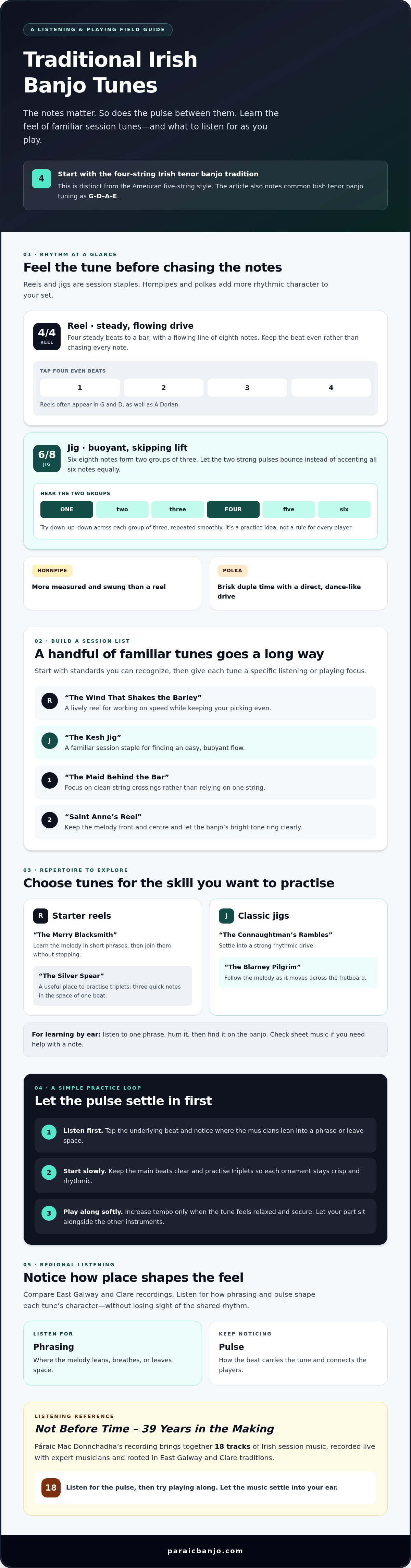
What makes traditional irish banjo tunes compelling is not just the notes, but the pulse between them. You can play a melody accurately and still miss its lift, especially when you’re finding your way through session repertoire. If you’re learning Irish tenor banjo, it also helps to know you’re following the four-string tradition, not an American five-string style.
You don’t need to learn thousands of tunes to get started. This guide introduces familiar session favourites, explains how the buoyant 6/8 jig differs from the driving 4/4 reel, and offers practical ways to listen for swing and phrasing. You’ll also learn what to notice in East Galway and Clare styles, where rhythmic feel is part of the musical conversation.
For a listening reference, Páraic Mac Donnchadha’s Not Before Time – 39 Years in the Making brings together 18 tracks of Irish session music, recorded live with expert musicians and rooted in East Galway and Clare traditions. Start by listening for the pulse, then try playing along. That’s one way to let the music settle into your ear.
Table of Contents
Understanding the Core Types of Traditional Irish Banjo Tunes
Reels and jigs are session staples, but a rounded set of traditional irish banjo tunes can also include hornpipes and polkas. Each has a distinct rhythmic character. Learn to recognize those differences and you’ll know not only which notes to play, but how to make them move.
The Reel: Fast, Fluid, and Fun
A reel is usually in 4/4, with four steady beats to a bar and a flowing line of eighth notes. Its even pulse gives the melody room to run, which suits the tenor banjo’s clear, percussive attack. Reels often appear in keys such as G and D, as well as A Dorian, a minor-sounding scale built around A. Try tapping four even beats as you listen. Keep the beat steady rather than chasing each note.
The Jig: Mastering the 6/8 Swing
A jig has six eighth notes in each bar, usually felt as two groups of three: “ONE-two-three, FOUR-five-six.” Keep the two strong pulses buoyant instead of accenting all six notes equally. As a picking exercise, try down-up-down across each group of three, then repeat smoothly. Treat this as a way to feel the jig’s shape, not a rule every player must follow. Compared with a reel’s even flow, a jig’s lift comes from the lilt between its pulses.
Listen for how the tune breathes before adding decoration. Triplets, three quick notes played in the space of one beat, can add sparkle, but they shouldn’t interrupt the jig’s lilt. Start slowly, keep the two main beats clear, and let the melody bounce.
Hornpipes, Polkas, and the Banjo’s Role
Hornpipes and polkas broaden your session vocabulary. Hornpipes often have a more measured, swung feel than reels, while polkas are brisk duple-time tunes with a direct, dance-like drive. Their contrasting rhythms can help you respond when a set changes character. For an overview of the instrument and its common Irish G-D-A-E tuning, see this guide to the tenor banjo.
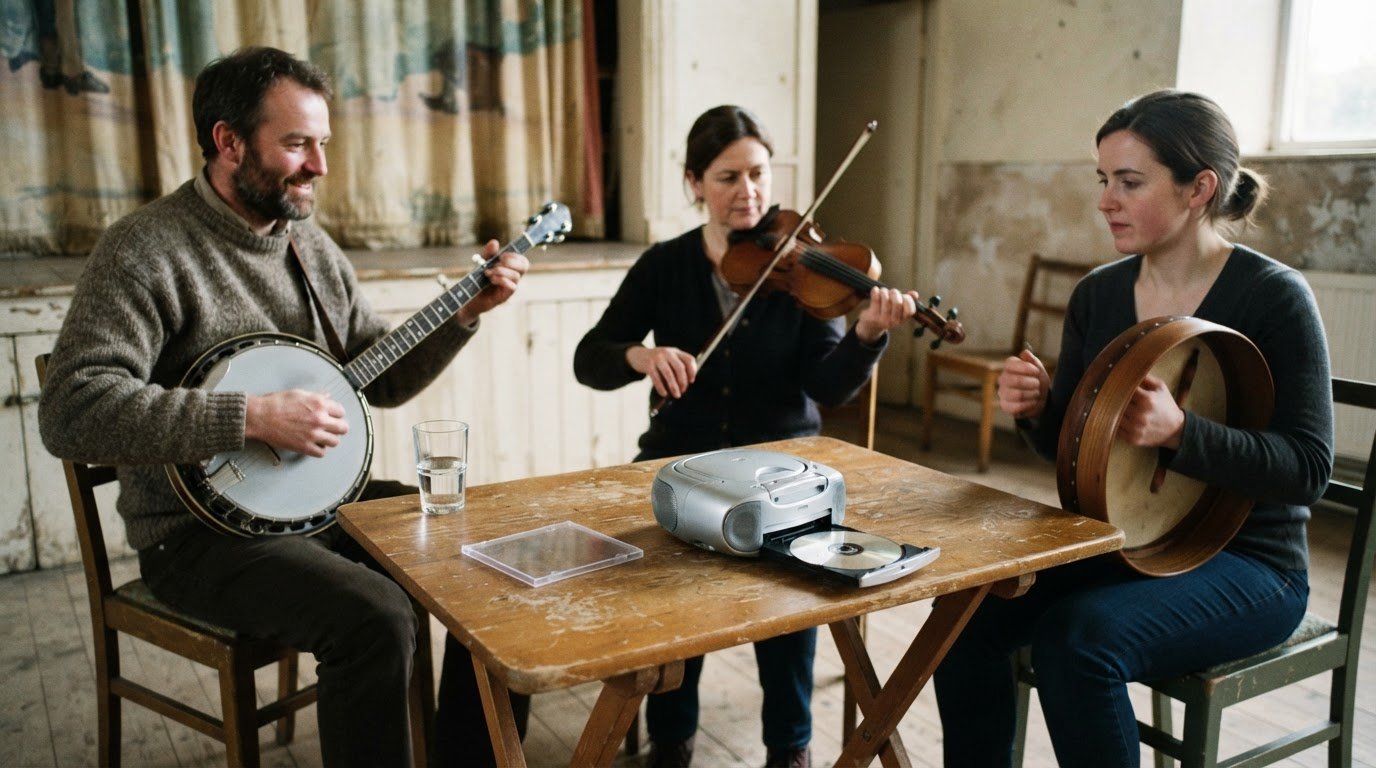
The banjo’s crisp attack can help a session feel connected, while steady timing keeps the melody moving alongside fiddles, flute, and accordion. You don’t need to play louder to make your part count. For practice, choose a recording, tap the underlying beat, then play along softly. Notice where the musicians lean into a phrase and where they leave space. That shared pulse turns a string of notes into a conversation.
The Essential 'Must-Know' Tunes for Every Session
A session list can feel endless, so start with familiar standards rather than trying to collect every tune you hear. Knowing a handful of traditional irish banjo tunes helps you recognize melodies, follow a set, and join in with more confidence. These favourites also offer a useful mix of clear melodic lines, quick runs, and ornamentation to practise.
Begin with a few well-travelled choices:
“The Wind That Shakes the Barley” is a lively reel that gives you a chance to work on speed while keeping your picking even.
“The Kesh Jig” is a widely recognized session staple. Use its familiar melody to focus on an easy, buoyant flow.
“The Maid Behind the Bar” gives you a chance to practise clean string crossings rather than relying on one string.
“Saint Anne’s Reel” puts the melody front and centre, letting the tenor banjo’s bright tone ring clearly.
These standards are more than a practice checklist. Shared repertoire makes it easier to recognize where a tune is going and connect with the players around you. The instrument’s story is part of that tradition, too: read about the banjo's journey to Ireland and its place in Irish music.
Starter Reels for Beginners
Try “The Merry Blacksmith” as a foundational reel. Learn the melody in short phrases, then join them without stopping. “The Silver Spear” is useful for practising triplets, quick groups of three notes that add a flick of ornament. To learn by ear, listen to one phrase, hum it, then find it on the banjo. Check sheet music if you need help with a note.
Classic Jigs to Build Your Rhythm
“The Connaughtman’s Rambles” gives you a chance to settle into a strong rhythmic drive, while “The Blarney Pilgrim” helps you follow a melody as it moves across the fretboard. Practise each at a comfortable, slower pace, keeping every note crisp. Increase the tempo only when the tune feels relaxed and secure. Then listen to a full session recording and notice how the players keep the tune moving together.
For a reference beyond isolated practice, listen to the live session playing on Páraic Mac Donnchadha’s Not Before Time – 39 Years in the Making. Listen to Páraic’s session album and follow how the melody sits within the ensemble.
Regional Styles: The Rhythmic Pulse of East Galway and Clare
Irish session music doesn’t have just one sound. East Galway and Clare are neighbouring traditions, yet players may shape the same kind of tune with different phrasing, accents, and energy. For banjo players, listening for these distinctions is a practical way to move beyond playing the melody correctly and begin giving it character.
The Soul of East Galway Banjo
East Galway style brings together soulful phrasing and rhythmic precision. Páraic Mac Donnchadha’s playing is rooted in this regional tradition, with a rhythmic and soulful approach to the music. A measured pace doesn’t mean losing the pulse or dragging the tune. It means resisting the urge to rush through the notes. Listen for the tune’s internal rhythm, pick evenly, and let important phrases breathe.
Try this: play a short phrase at a comfortable pace, keeping the beat steady while letting the melody’s shape guide your emphasis. Aim for control and clarity, not speed. That balance can make traditional irish banjo tunes feel expressive rather than mechanical.
Capturing the Clare Lift
In Clare playing, “lift” describes the buoyant forward motion that makes a tune feel as if it’s dancing along. It comes from the way musicians shape and accent the rhythm, not simply from playing faster. A banjo can support that motion with crisp, even picking while leaving space for the fiddle or flute to lead a phrase or add its own turns.
Practise with a recording: listen first to the melody, then to how the instruments interact. On your next pass, keep your notes light and steady, and notice where the ensemble seems to lean into the beat. Don’t force extra accents into every bar. Lift comes from playing together, not from making each note louder.
Regional roots give you a richer listening vocabulary and can help you respond more thoughtfully in a session. Follow the musicians’ phrasing, keep your part supportive, and stay open to how a tune is being played in that moment. For a closer comparison of these traditions, read East Galway vs Clare music. Then listen again with one question in mind: what gives this performance its particular pulse?
Mastering the Repertoire: Actionable Tips for Authentic Playing
Authentic playing depends on more than accurate notes. A useful routine combines close listening, clear ornamentation, and steady timing. Work through these steps with one tune at a time, and don’t chase speed before the melody feels settled.
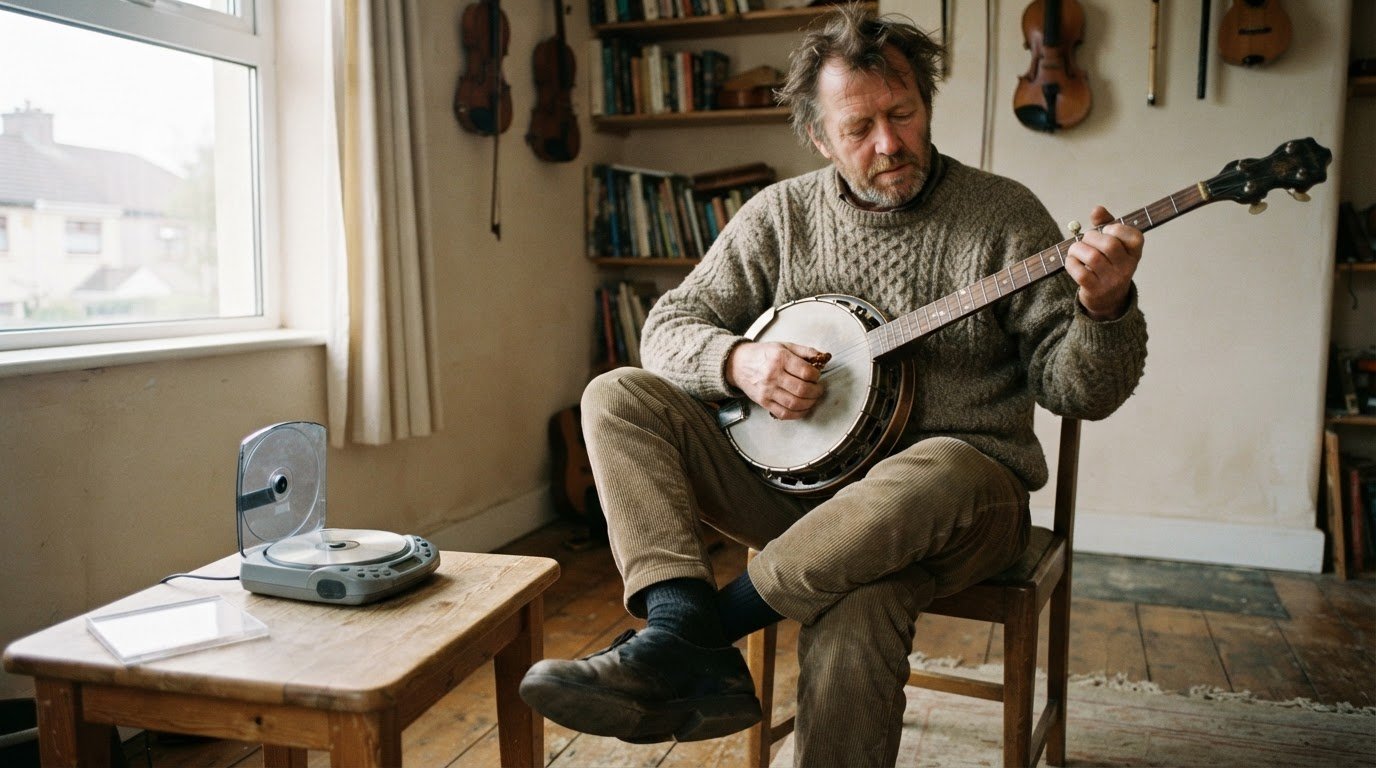
Listen first. Hear the tune played by an experienced traditional musician before picking up your banjo. Notice the pulse, phrase endings, and how the melody sits alongside the other instruments.
Shape your triplets. A triplet is a quick group of three notes used as an ornament. Practise it slowly and evenly before adding it to a tune.
Keep pulse ahead of pace. Play at a tempo where every note sounds clean. Speed can develop over time, while a rushed tune can lose its lift.
Check your phrasing. Listen back to a clear recording of your own playing and compare it with a strong reference. Pay attention to timing and whether your phrases feel natural.
The Secret to Great Banjo Triplets
Players may use a down-up-down or down-down-up picking motion for a triplet. Neither approach fits every hand or musical situation. The aim is a crisp, even sound that fits the tune’s pulse. Start on a single string with a small, relaxed wrist motion. Keep the notes distinct, like a quick “pop,” rather than letting them blur into a muddy roll. Once the triplet sounds clean, place it into a melody without disturbing the beat.
Listening as a Learning Tool
Listen with a question in mind. Can you hear where the tune’s first section ends and its contrasting second section begins? These are often called the A and B parts. Each part usually has its own melodic shape, and repeated listening helps you recognize the transition. Hum each section, then try playing it from memory before checking your notes.
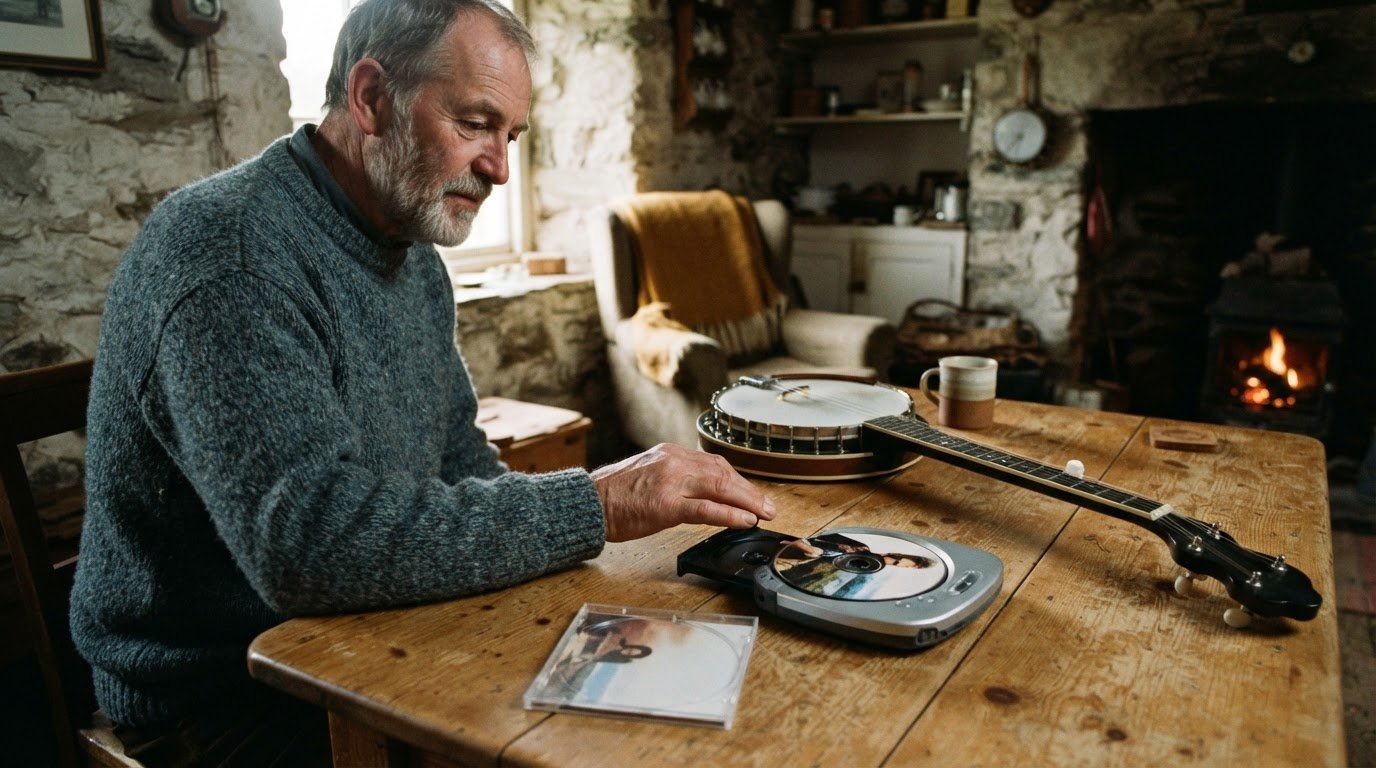
Album notes, when available, can add context by identifying performers, tunes, or regional influences. Read them alongside a focused listen, but let your ears lead: follow the melody, then listen again for the banjo’s timing and ornamentation. For more ideas on choosing recordings, see this guide to traditional Irish session music CDs.
For a focused listening reference, Páraic Mac Donnchadha’s Not Before Time – 39 Years in the Making brings together 18 tracks of Irish session music, recorded live with expert musicians and rooted in East Galway and Clare traditions. Listen for the shared pulse before studying individual notes. Explore Páraic’s session album as you build your listening routine.
Discovering the Soul of the Banjo in 'Not Before Time'
Learning a tune from notation or a quick play-through gives you its outline. Hearing a musician shape it in a live ensemble reveals details the notes alone can’t show: the placement of the beat, the space between phrases, and the way a melody responds to the other players. That listening experience is at the heart of Páraic Mac Donnchadha’s debut album, Not Before Time – 39 Years in the Making.
Rooted in East Galway and Clare traditions, the album offers a way to hear regional phrasing in context. Rather than treating traditional irish banjo tunes as isolated melodies, listen for how the pulse carries through the group. Páraic’s rhythmic playing gives you a chance to study that feel, phrase by phrase.
18 Tracks of Pure Tradition
The album brings together 18 tracks of Irish session music, recorded live with expert musicians. The shared playing matters: the banjo’s timing sits among the other instruments, responding to their phrasing and helping the music move as a whole. Listen not only for a clean run of notes, but also for the give and pull that helps a session tune feel alive.
Try this focused listening routine: choose one track, tap the underlying beat, and follow the banjo through a phrase. Then listen again, this time noticing how the other musicians support or answer it. Explore the story behind the Irish banjo debut for more context on the album and its traditions.
The album is available as a digital release and a physical CD. Either format lets you return to the same performance and hear details you might miss on a first listen. Give a tune a few attentive plays before picking up your banjo, then play along and compare your timing with the ensemble.
Why Purists Love This Collection
A recording preserves a particular musical moment. This album brings together Páraic’s approach to East Galway and Clare playing with fellow musicians, rather than presenting the music as a solo exercise. Listen across the tracks and notice how the rhythmic character shifts from tune to tune.
For a closer look at the project, read the album feature, then choose the format that suits your listening: get Not Before Time – 39 Years in the Making on CD or as a digital album. Follow the pulse and let the tunes guide your ear.
Keep the Session Pulse in Your Playing
Traditional irish banjo tunes are about more than the notes. Reels, jigs, hornpipes, and polkas each have their own feel, while regional styles like East Galway and Clare show how phrasing and pulse give a melody its character. Start with a small group of session standards, listen closely, and build a steady rhythm before reaching for speed or ornamentation.
For a musical reference rooted in these traditions, Páraic Mac Donnchadha’s Not Before Time – 39 Years in the Making brings together 18 tracks of live-recorded session music, shaped by his long musical journey. The album’s detailed liner notes add context, helping connect the tunes with their musical roots.
Make a tune part of your practice: listen once for the pulse, again for the phrasing, then pick up your banjo and play along. Explore Not Before Time – 39 Years in the Making on CD or as a digital album and hear the music in context.
Frequently Asked Questions
What is the best type of banjo for playing traditional Irish tunes?
A four-string tenor banjo is the usual choice for Irish traditional melody playing. It’s commonly tuned G-D-A-E, in fifths, which lets players follow fiddle melodies while giving the music a crisp, percussive sound. A shorter-scale tenor is often chosen for this style, but comfort matters too. If you’re choosing an instrument, try holding it and playing a few scales before you decide.
Are Irish banjo tunes different from Bluegrass banjo songs?
Yes. Irish tenor banjo playing focuses largely on carrying traditional dance melodies, such as reels and jigs, while bluegrass banjo is strongly associated with the five-string banjo and its characteristic picking patterns. The instruments, tunings, and musical roles differ. Some tunes may cross musical traditions, but for traditional irish banjo tunes, listen for melody-led playing and the rhythmic feel of the session.
How many tunes do I need to know to join an Irish session?
There’s no set number, and you don’t need a huge repertoire before you start listening or taking part. Build a small, familiar set first, learn the melody and rhythm securely, and listen before joining a tune you don’t know. You can also use a list of session standards as a learning framework, rather than treating it as an entry requirement.
Is it hard to learn traditional Irish banjo tunes for a beginner?
It can be challenging, but a beginner can make steady progress by learning one short phrase at a time. Reels and jigs move differently, so first practise hearing their pulse, then play slowly enough to keep each note clear. Use a recording as a reference and repeat a phrase until you can hum it. Speed and ornamentation can come later, once the melody feels comfortable.
What are the most common keys for Irish banjo music?
G and D are common keys for Irish session tunes, and you’ll also encounter tunes in A Dorian, a scale with a minor sound centred on A. The key varies from tune to tune, so check a reliable notation source or listen for the melody’s tonal centre before practising. Learning familiar finger patterns in these keys can make it easier to pick up new tunes by ear.
Where can I find reliable tabs or sheet music for these tunes?
Look for established Irish traditional music collections or notation sources that identify the tune and its version clearly. Different players may use variations, so treat sheet music as a guide rather than the final word. Compare the written melody with a recording, then listen for phrasing and rhythm that notation may not capture. If you’re learning by ear, work through a short phrase at a time.
Why is the 4-string tenor banjo preferred over the 5-string for Irish music?
The four-string tenor banjo suits the melody-focused role common in Irish traditional music. Its standard G-D-A-E tuning, arranged in fifths like a fiddle’s tuning but an octave lower, makes fiddle melodies practical to play and gives the sound a strong, bright attack. The five-string banjo is closely associated with other styles, especially bluegrass, and is generally played with different techniques and musical roles.
What does 'playing with lift' mean in an Irish session?
“Lift” is the buoyant forward motion that makes a tune feel lively and danceable, not simply fast. It comes from clear timing, light accents, and the way musicians shape phrases together. To hear it, listen to a session recording and tap the main beat without tapping every note. Then play along gently, keeping your picking even and responsive to the other instruments.
Comments