Where to Find Authentic Irish Music for Sale: A Collector’s Buying Guide for 2026
- Paraic Mac Donnchadha

- Jun 13
- 13 min read
What if that "Traditional Irish Hits" playlist you just downloaded is actually the musical equivalent of a plastic leprechaun? It's a frustrating reality for many collectors who find themselves buried under generic drinking song compilations that lack the true lift of a real session. You're looking for the grit, the history, and the specific rhythm of a well-worn instrument, not a polished studio product made for a gift shop. If you want to buy irish tenor banjo album recordings that feel like sitting in a corner of a Clare pub, you have to look beyond the major streaming platforms. I've spent nearly forty years living this tradition, and I know that finding the real pulse of the music is easier than you think.
I'm here to help you move past the noise and discover recordings that carry the weight of a lifetime's passion. You'll learn how to evaluate recordings for regional authenticity, such as the lyrical, relaxed pace of the East Galway style. We will also explore the best ways to support independent artists directly so you can own high-quality audio that preserves the living tradition. From identifying detailed liner notes to understanding the importance of direct-to-artist sales, this guide ensures your collection reflects the true heart of Irish music in 2026.
Key Takeaways
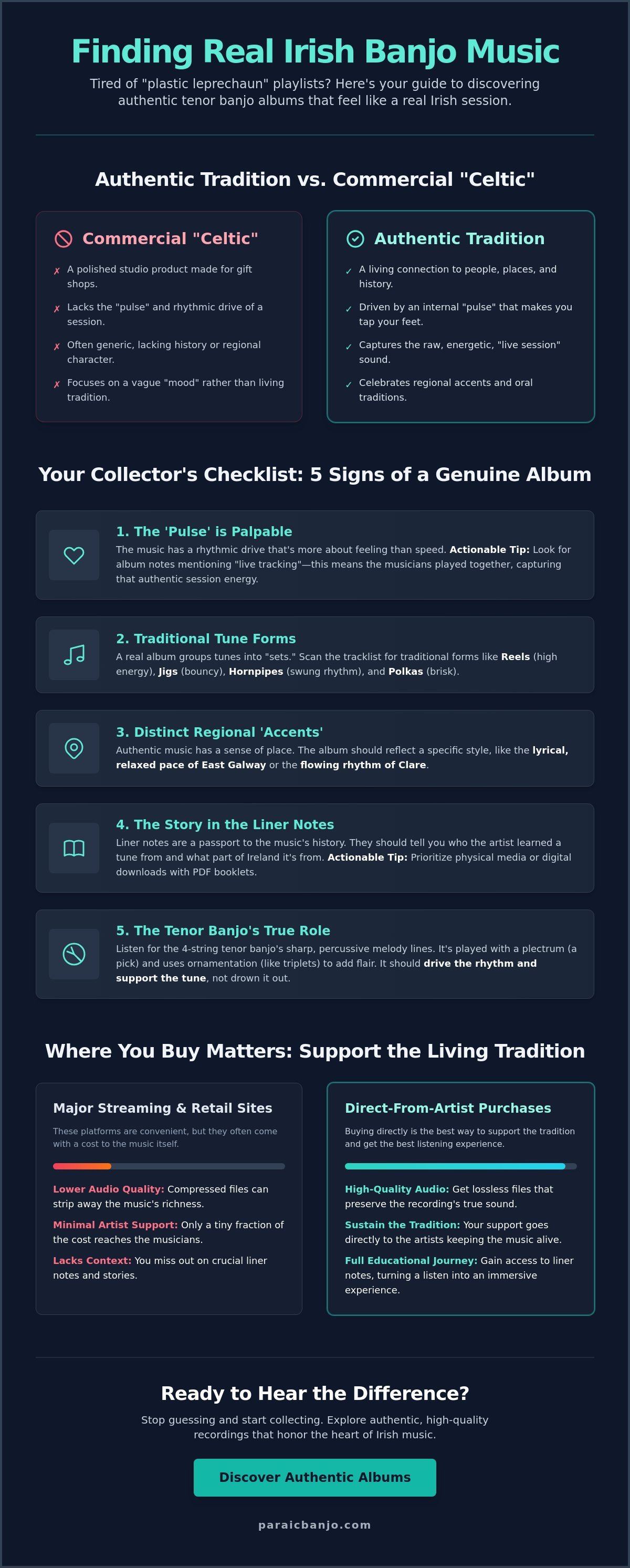
Distinguish between commercial "Celtic" music and true session recordings by looking for a rooted "pulse" and community history.
Scan tracklists for traditional forms like reels, jigs, and hornpipes to ensure you buy irish tenor banjo album collections that honor the oral tradition.
Explore the distinct "accents" of Irish music, from the relaxed East Galway lilt to the flowing rhythm of Clare, to find your preferred regional sound.
Opt for direct-to-artist purchases to secure high-quality audio while ensuring your support directly sustains the living tradition.
Choose physical media with extensive liner notes to transform a simple listen into an immersive educational journey through musical history.
Table of Contents
Defining Authenticity: What Makes Irish Music Truly "Traditional"?
Key Features to Look for When Buying Traditional Irish Albums
Comparing Your Options: Where to Buy Authentic Irish Music Online
Understanding Regional Styles: East Galway and Clare Traditions
Your Next Steps: How to Order and Enjoy Authentic Irish Music
Defining Authenticity: What Makes Irish Music Truly "Traditional"?
Authentic traditional music isn't just a genre you find by clicking a tag on a massive retail site. It's a living, breathing connection to people and places. It’s about tunes learned by ear in a crowded kitchen or a dim pub corner. This oral tradition means the music stays fluid; it’s never quite the same twice. When you decide to buy irish tenor banjo album recordings, you aren't just purchasing a digital file. You’re stepping into a lineage of custodians who have kept these melodies alive for decades through sheer passion and practice.
You can find a basic overview of Irish traditional music that lists the instruments, but the real secret is the "pulse." This isn't the same as the "Celtic" mood music often sold in gift shops. Traditional music has a specific internal clock, a rhythmic drive that makes your feet tap without you even realizing it. The tenor banjo is central to this. With its four strings and sharp, percussive attack, it provides the skeleton that the rest of the session hangs on. Authentic music usually shares these core traits:
A focus on the "pulse" or internal rhythm rather than just sheer speed.
Melodies passed down through generations by ear, not just sheet music.
A deep respect for regional "accents" or playing styles.
The "Session" Sound vs. Studio Polish
A real session is messy, energetic, and wonderfully human. Many commercial albums scrub that life away with too much studio polish. If you want the real thing, look for recordings that favor live interaction. You want to hear the banjo and fiddle breathing together, pushing and pulling the tempo. My debut project, Not Before Time - 39 Years in the Making, was built specifically to capture this raw, honest connection after a lifetime in the tradition.
Actionable Tip:
Always check the album credits or descriptions for phrases like "live tracking." This means the musicians played in the same room at the same time. This captures that authentic session lift that individual overdubs simply can't replicate.
Instruments of the Tradition
The Irish tenor banjo is a unique beast. Unlike its five-string American cousin, it's played with a plectrum to deliver fast, clear melody lines. A hallmark of the style is "ornamentation." Think of these as little musical flourishes, like a quick flick of the wrist to add a triplet, that make a simple melody sound unique to the player. It’s a delicate balance. The best players ensure their accompaniment follows the melody closely. It should support the tune, not drown it out. If you're ready to hear this in action, you can grab the Not Before Time digital album to experience that rhythmic drive for yourself.
Key Features to Look for When Buying Traditional Irish Albums
Finding a genuine recording shouldn't feel like a guessing game. When you want to buy irish tenor banjo album collections that stand the test of time, look under the hood. It’s about more than a catchy title or a green cover. You’re looking for evidence of a lifetime spent in the music. Look under the hood. Dive in.
Start with the tracklist. A real traditional album isn't just a random assortment of songs. It should be organized into "sets." This is where several tunes are played back-to-back to build energy, mimicking a live session. Look for a mix of these forms:
Reels: High-energy tunes in 4/4 time.
Jigs: Bouncy, rhythmic melodies in 6/8 time.
Hornpipes: Slower tunes with a distinct, swung rhythm.
Polkas: Bright, brisk melodies common in the South of Ireland.
The Power of the Liner Notes
Liner notes are the heart and soul of a collector's item. They act as a passport, proving the heritage of every tune. A great album doesn't just name the track; it tells you who the artist learned it from and what part of Ireland it calls home. This context is what the Irish Traditional Music Archive works so hard to preserve, and your personal collection should do the same. Listen closely. Feel the lift.
Actionable Tip:
Prioritize albums that tell stories about where the tunes were learned from mentors. If an artist can tell you they learned a reel from a fiddle player in East Galway thirty years ago, you've found the real deal.
I believe the stories behind the tunes are as important as the notes. You can see how I’ve documented these histories in my Irish music liner notes. It’s about being an educator as much as a performer. It's a shared journey.
Track Selection and Variety
A generous album offers a wide window into the artist's world. While some releases feel thin with only ten tracks, a comprehensive debut often stretches further. My project features 18 tracks because after 39 years, there’s a lot of ground to cover. You’re the judge. Look for a balance of high-octane reels and soulful jigs to show musical range.
Choosing to buy irish tenor banjo album recordings from independent artists ensures technical quality matches cultural depth. If you're buying digital, check for lossless formats like FLAC or WAV. You want to hear every snap of the plectrum. For a physical connection, the Not Before Time - 39 Years in the Making physical CD includes a 36-page booklet that puts this history in your hands. It’s a definitive statement of passion.
Comparing Your Options: Where to Buy Authentic Irish Music Online
Where you spend your hard-earned money determines the future of the tradition. It's that simple. In a world of massive, faceless marketplaces, finding the real thing requires a bit of strategy. Big box retailers are fine if you’re looking for a bargain on a generic compilation, but they’re often poor for discovery. They don't understand the nuances of a regional style. When you want to buy irish tenor banjo album recordings that carry the true weight of the session, you need to look where the musicians themselves hang out.
Specialty folk stores offer better curation, but they can’t always keep up with the explosion of independent releases. The gold standard is always going to be the direct-from-artist website. This is where the music lives. It’s the most direct way to ensure your support keeps the tradition healthy. With streaming payouts in Ireland sitting as low as €0.003 to €0.005 per play in 2025, a single album purchase does more for an artist than thousands of casual streams ever could. It’s a direct vote for the music you love.
Actionable Tip:
Buying directly from the source often grants you access to limited edition physical CDs and high-quality, lossless digital files that big retailers simply don't stock. Always check the artist's "About" page for a direct store link first.
Digital Downloads vs. Physical CDs
Choosing your format is about how you want to experience the story. Digital downloads are perfect for immediate access and high-quality audio on the go. However, physical media is making a massive comeback. Vinyl sales in Ireland saw a 20% increase in 2025, proving that collectors still crave something they can hold. A physical CD isn't just a disc; it’s a gallery of artwork and printed notes that provide a deeper connection. When you buy traditional irish music direct from artist sources, you’re often getting a more complete package than a standard digital storefront provides.
Supporting Independent Releases
Independent releases are where the real energy hides. Major label "Celtic" hits often prioritize a polished, commercial sound that can feel a bit hollow. In contrast, an independent album is usually a labor of love, recorded with the raw, unfiltered energy of a live session. These recordings are vital for preserving local styles, like the lyrical East Galway banjo tradition. You can discover a lifetime of this work in the Not Before Time - 39 Years in the Making collection. It’s an invitation to own a piece of history that was nearly four decades in the making. Support the living tradition. Keep the pulse beating. It makes all the difference.
Understanding Regional Styles: East Galway and Clare Traditions
Irish traditional music isn't a monolith. It’s a vivid map of different regional accents, each with its own vocabulary and heartbeat. When you decide to buy irish tenor banjo album recordings, you aren't just picking a genre; you're often choosing a specific local dialect. Some regions favor technical fireworks and high speed. Others, like the storied traditions of East Galway and County Clare, prioritize the "lift" and the soul of the melody. Understanding these nuances helps you appreciate the depth of the tradition you’re supporting.
The East Galway style is famously relaxed. It’s lyrical, slightly slower, and values the space between the notes. It’s a "thinking person's" style that lets the melody breathe. On the other hand, the Clare style, particularly from West Clare, is characterized by a flowing, rhythmic drive. It’s the sound of the dance floor, built on a steady pulse that feels almost hypnotic. A perfect album often blends these influences, creating a soulful and balanced listening experience that honors both the quiet kitchen session and the lively pub dance. It’s about the balance.
The Rhythmic Soul of the Banjo
The "East Galway bounce" is a specific way of phrasing that makes the banjo feel like it’s dancing. It’s a world away from the aggressive, machine-gun style of some modern recordings. This bounce is subtle, built on a swing that mimics the natural rhythm of speech. It’s what gives the music its infectious energy without needing to rush. If you want to dive deeper into these distinct regional flavors, you can explore our guide on east galway vs clare music. Listen for the lilt.
Actionable Tip:
When listening to a new track, ignore the speed. Instead, listen for the "swing" in the rhythm. It should feel like a steady heartbeat, not a frantic race. If the rhythm feels grounded and inviting, you’ve found an authentic regional pulse.
The Influence of the Masters
Internalizing these regional nuances doesn't happen overnight. It takes decades of listening to the masters and sitting in sessions. Spending 39 years in the making of a project allows an artist to move past just playing the notes. It becomes about stylistic maturity and local heritage. Collectors often seek out recordings that honor specific local lineages because they carry a weight of history that newer, generic releases simply lack. You are buying a piece of a lineage. It's a connection to the past.
This deep-rooted connection is what makes a debut collection feel legendary rather than just new. It’s a statement of a lifetime’s passion and a tribute to those who came before. When you buy irish tenor banjo album tracks from a seasoned master, you’re hearing the echoes of every session they’ve ever played. If you are ready to bring this authentic regional sound into your home, you can buy the Not Before Time digital album today and hear the East Galway lilt for yourself. It’s more than just music; it’s a piece of the West of Ireland captured in sound. Join the journey.
Your Next Steps: How to Order and Enjoy Authentic Irish Music
You’ve done the research. You know the difference between a commercial "Celtic" jingle and the rooted, rhythmic pulse of a real East Galway session. Now, it’s time to bring that sound into your own home. Taking the leap to buy irish tenor banjo album recordings is more than a transaction; it’s an investment in a living history. Whether you’re a long-time collector or a newcomer to the tradition, how you engage with the music matters. It’s about setting the stage for an immersive experience that goes beyond just background noise. Let’s get you started.
The first step is deciding on your format. If you value immediate access, the digital album is your best bet. You can be listening to the first track in minutes. However, if you want the full sensory experience, the physical CD is a true collector’s item. It puts the 36-page booklet right in your hands. Once you have your music, I recommend a specific ritual for your first listen:
Step 1: Open the liner notes immediately. Read the story of the first tune to set the historical context before the first note hits.
Step 2: Listen for the interplay. Don't just focus on the banjo; hear how it breathes with the fiddle or the piano accompaniment.
Step 3: Share the lift. If a track moves you, tell a friend. Word of mouth is how this tradition has survived for centuries, and it’s how it will thrive in the digital age.
Navigating the Storefront
Ordering music directly from Ireland should be a breeze, no matter where you are in the world. Whether you’re in Dublin, New York, or Sydney, global delivery ensures that physical copies reach your door safely. If you’re just looking to dip your toes in, you can always start by purchasing individual digital tracks. This lets you sample the style before committing to the full collection. It’s a flexible way to build your library at your own pace.
Actionable Tip:
If you choose the digital route, make sure to download the metadata along with your files. This ensures track names, artist info, and years are correctly displayed in your media player, keeping your digital collection as organized as a physical shelf.
The Final Verdict on Authenticity
Authenticity isn't a marketing buzzword. It’s found in the hands of musicians who live the tradition every single day. When you choose to buy irish tenor banjo album tracks from a source that respects the lineage of the tunes, you become part of that story. You aren't just a listener; you’re a patron of the arts. Ready to start your journey? You can browse the authentic Irish music for sale today and find the recording that speaks to you. I’m always happy to connect with fellow enthusiasts, so don't be a stranger. Let’s keep the music playing. Cheers!
Bring the True Pulse of the Session Home
You now have the tools to separate commercial noise from the genuine heartbeat of traditional music. Remember to look for that elusive pulse and prioritize albums with rich liner notes that honor specific regional styles like the lyrical East Galway lilt. By choosing to support independent artists directly, you ensure the tradition remains a living, breathing thing for generations to come. It’s about more than just a purchase; it’s about becoming a custodian of the music yourself. It’s a shared responsibility that keeps the tunes alive.
When you’re ready to buy irish tenor banjo album recordings that truly reflect a lifetime of dedication, look for projects that capture raw, live session energy. My debut project, Not Before Time - 39 Years in the Making, distills nearly four decades of heritage into 18 tracks recorded live with session masters. We offer global shipping for the limited-edition physical CD, so this history can reach you wherever you are. Shop Not Before Time - The Definitive Authentic Irish Banjo Album today and join the journey. I can’t wait for you to hear these tunes and feel the lift for yourself. See you at the session!
Frequently Asked Questions
What is the best way to listen to authentic Irish music?
The best way is to listen as if you’re sitting in the corner of a busy session. Focus on the "lift" and the rhythmic interplay between the instruments. Using high quality headphones or a good home speaker system helps you catch the subtle snap of the plectrum and the breathing of the flute. It’s about feeling the pulse of the room through the speakers.
Is it better to buy a physical CD or a digital download for Irish music?
It really depends on how you like to connect with the art. Physical CDs are wonderful collectors’ items because they include printed liner notes and tactile artwork that tell the full story of the project. Digital downloads are perfect for immediate listening on the go. Both formats support the artist directly, though the physical disc offers a more immersive historical experience.
How can I tell if an Irish music album is truly "traditional"?
Look for a focus on the melody and the oral tradition rather than heavy studio production. Truly traditional albums usually feature sets of reels, jigs, and hornpipes played with a specific regional "accent." If the artist provides the history of where they learned the tunes, you can be sure you’re hearing the real deal. Authenticity lives in that shared history.
What instruments are most common in an Irish session recording?
You’ll almost always hear the tenor banjo, fiddle, flute, or accordion leading the way. These are often supported by the piano or guitar, which provide the rhythmic foundation. In a genuine recording, these instruments should sound like they’re having a conversation. No single instrument should drown out the others; they should work together to create a unified, driving rhythm.
Do independent Irish music artists ship CDs globally?
Most independent artists are happy to send their work across the world. My project, Not Before Time - 39 Years in the Making, is available for global shipping from Ireland to the US and beyond. It’s a point of pride for us to see these physical CDs reach collectors in different countries. It helps keep the global community of traditional music lovers connected.
Can I buy individual tracks from the Not Before Time album?
Yes, you can purchase individual digital tracks if you want to sample the style first. This is a great option if a particular set of reels or a specific jig caught your ear in a preview. While the full album offers the most complete narrative of my 39 year journey, individual tracks let you build your collection at your own pace.
What makes the East Galway style of banjo playing unique?
It’s characterized by a relaxed, lyrical pace and a soulful "lilt." Unlike some modern styles that focus on sheer speed, East Galway playing leaves space between the notes. This allows the melody to breathe and emphasizes the internal "bounce" of the rhythm. It’s a thoughtful, rhythmic approach that feels like a steady heartbeat rather than a race.
Why are liner notes so important for traditional music collectors?
Liner notes act as the passport for the music. When you buy irish tenor banjo album recordings with extensive notes, you’re getting the heritage of every tune. They tell you who the musician learned from and which townland the melody calls home. This context is vital for preserving the oral tradition and truly understanding the music you’re enjoying.


Comments